
When Charismatic Culture Becomes More Important Than Christ
How a movement can lose Christ while still speaking his name

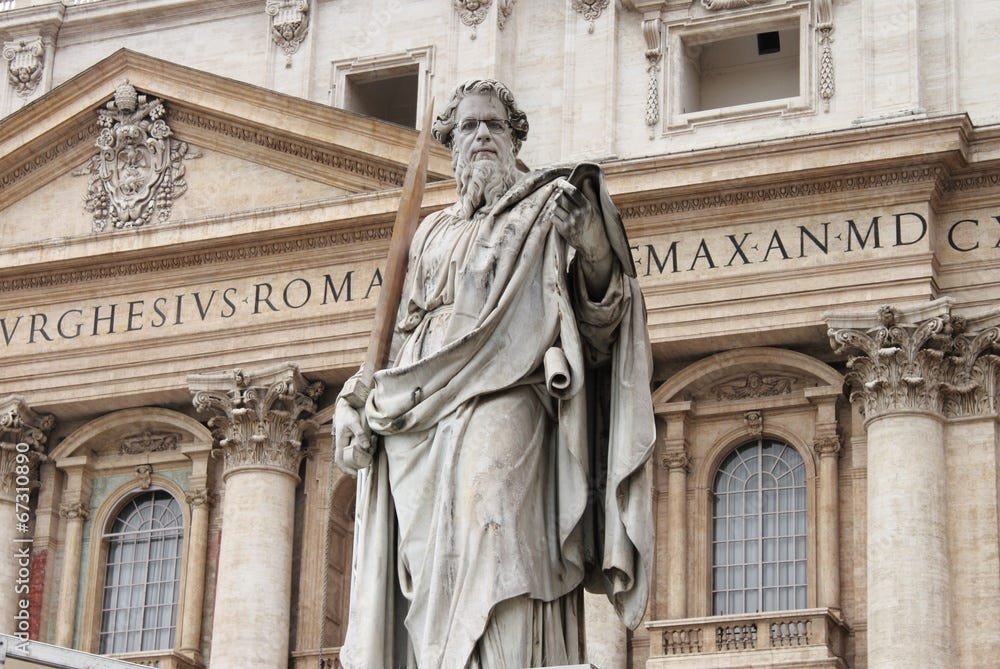
Looming large in my first church was Apostle Bill. That was not his real name, but it was his title, and titles mattered in that world.
He was my pastor’s pastor and in my mind he was larger than life. When he preached, it felt like listening to someone operating at a level of revelation and authority of a true apostle of Christ. This was reinforced by his many sermons on the role and authority of the modern apostle.
He taught how every time the New Testament quoted the Old Testament, the wording was different from the Old Testament itself. He explained this as evidence of apostolic authority. The apostles were not merely repeating Scripture. They possessed authority to reinterpret and apply it under the inspiration of the Spirit.
I wasn’t just in awe. I wanted that level of revelation and authority.
I wanted to be an apostle.
I’ve always been a learner so I thought my next step would be seminary. But I was taught that “cemetery” would drain the faith from my life and that God could “raise me up” right there in that church. I didn’t need to go anywhere; I just needed to stay aligned with the apostle and God would do His thing.
Years later, after enrolling in ministry classes, I learned something painfully simple. The New Testament quotations of the Old Testament were not inspired apostolic rewrites at all. They matched the Septuagint, the Greek version of the Old Testament commonly used in the first century. The discrepancy was not evidence of extraordinary revelation. It was evidence that I did not yet understand the textual history behind what I was reading.
The real lesson was not that apostles possessed extraordinary revelation. It was that our entire culture had quietly detached spiritual authority from theological formation.
I have spent the better part of 25 years learning that entire systems of authority have developed where confidence could substitute for theological depth and where spiritual language can function independently of basic Christian teachings.
I remain deeply Pentecostal in conviction. I believe the Holy Spirit still heals, speaks, convicts, delivers, empowers, and transforms. I believe the church desperately needs the active presence of God.
But I also increasingly believe the charismatic church is producing believers who can navigate charismatic culture fluently while remaining unlearned in the actual way of Jesus.
And this should deeply concern us.
What We Actually Produce
The modern charismatic church has become remarkably effective at producing a certain kind of believer.
These believers know the language of revival, breakthrough, impartation, spiritual warfare, and anointing. They know how to move inside worship culture and navigate prophetic environments as they understand them.
But many remain profoundly ignorant of the meaning of Scripture, church history, repentance, theological reasoning, and cruciform discipleship.
Put many modern charismatics in front of the Sermon on the Mount and they become tourists in their own religion.
That sentence sounds extreme until you realize how possible it has become to spend years immersed in charismatic culture while remaining only lightly formed by the actual way of Jesus.
And eventually a movement begins reproducing charisma more effectively than Christlikeness.
Discernment Is the Wound
This becomes especially dangerous in how charismatic culture talks about discernment.
Claims of special revelation and spiritual insight are often treated as the highest forms of authority in charismatic spaces. Entire ministries are built around prophetic impressions, hidden knowledge, spiritual interpretation, and the assumption that certain leaders possess unusual access to divine insight.
There is no real discernment of good and evil without being taught how God defines these things.
You cannot discern what you have never been taught to recognize.
If believers are not deeply rooted in Scripture and the historic understanding of what it means to be a Christian, they will eventually lose the ability to distinguish spiritual language from spiritual truth.
The issue goes beyond bad teaching. Much of charismatic culture assumes spiritual experiences automatically produce spiritual maturity. But spiritual intensity alone does not create discerning Christians.
This is part of why charismatic spaces can become simultaneously obsessed with revelation while remaining vulnerable to manipulation. IHOPKC had a 10 year long prayer meeting without anyone figuring out it was a sex cult for Mike Bickle.
The Tradition Ate the Gospel
Paul’s fear in Galatians was not that the church would openly abandon Christ. It was far more subtle than that. The Galatians were becoming religious in ways that slowly displaced Christ while keeping all the religious vocabulary intact.
They still talked about God. They still gathered. They still practiced their religion. But Paul looked at what they were producing and said they had been severed from Christ.
I increasingly have that concern for modern charismatic culture.
Because eventually preserving the culture becomes more important than being formed into Christ. Some of the largest churches in our movement are now wrestling with protecting their culture over the health of the people in their churches.
Being Spirit-filled has increasingly become a marker of identity more than evidence of conformity to Christ. Charismatic is becoming a culture instead of a descriptor.
And like the Galatians, we often cannot recognize the drift because the drift happens inside familiar religious language.
We still talk about Jesus, revival, the kingdom, and the Holy Spirit. But eventually the movement begins teaching people how to be charismatic more than how to be Christian.
And that is how a movement drifts from Christ while still convinced it is best at representing Him.
The Way Back Is Not Backward
The problem is not that charismatic believers do not know their Bibles. Many do. Chapter and verse. Confident and precise.
The problem is that they have been given a hermeneutic along with the text. A lens that controls what the text can mean before they ever read it. And that lens was handed to them by a leader they were never taught to question, operating in a tradition they were never taught to examine, drawing on sources they were never taught to trace.
They can quote the verse. They just cannot tell you where the interpretation came from. Whether it is ancient or invented. Whether it is orthodox or heretical. Whether it has been examined by anyone outside their movement.
For too long much of charismatic culture has treated academics as the enemy of faith. But ignorance has not protected the charismatic church. It has made us vulnerable.
It has made us vulnerable to manipulative leaders, bizarre doctrines, prophetic movements detached from accountability, and spiritual claims that collapse under even basic theological examination.
The Holy Spirit is not threatened by learning. The Holy Spirit inspired Scripture and has been forming the church for two thousand years. The Spirit did not stop teaching the church after the book of Acts and wait for modern charismatic personalities to rediscover truth through private revelation.
A church rooted in Scripture and the historic faith is not less open to the Spirit. It is better equipped to recognize the Spirit rightly. It has tools to test what it receives. It knows the difference between a fresh word and an old error with new vocabulary.
We do not need less Bible. We need better hermeneutics. We need teachers who are accountable to something larger than their own revelation. We need believers who love the Word enough to ask where the interpretation came from.
A Better Way Forward
If we are serious about not drifting, I think there are at least three things we need to recover.
First, stop following people who have made their revelation the center of Christianity.
The teacher whose revelation cannot be questioned and whose authority depends almost entirely on spiritual prowess is not an example of apostolic authority.
That kind of environment does not produce discerning Christians. It produces dependent ones.
Second, start asking where the new revelation came from.
And “from heaven” is not a valid response. If a word is true it can survive examination. If an interpretation is sound it has roots somewhere. Ask who else has believed this. Ask what the church has said about it across two thousand years.
Third, leaders need to learn publicly again.
Show your congregation how you study. Tell them what you had to unlearn. Let them see where you go to learn and why.
Right now one of the most important things a charismatic leader can model is what it looks like to be Spirit-filled while still sitting at someone else’s feet.
Closing Call
Apostle Bill has gone on to glory, but I have recently gone back and listened to some of his sermons. I still recognize the confidence and boldness that once captivated me.
But now I also grieve the version of spirituality I once wanted to become.
I wanted to be the man who carried extraordinary revelation. The man who spoke with unquestioned authority. The man who brought heaven to earth through sheer spiritual power.
But the years have taught me that Christianity is not ultimately about becoming spiritually impressive. It is about becoming like Christ.
I wanted to be Apostle Bill. The years taught me to want to be like Jesus instead. I’m still not sure our movement knows the difference between those two desires. Or how much is at stake in the choosing.
Let me know what you think!
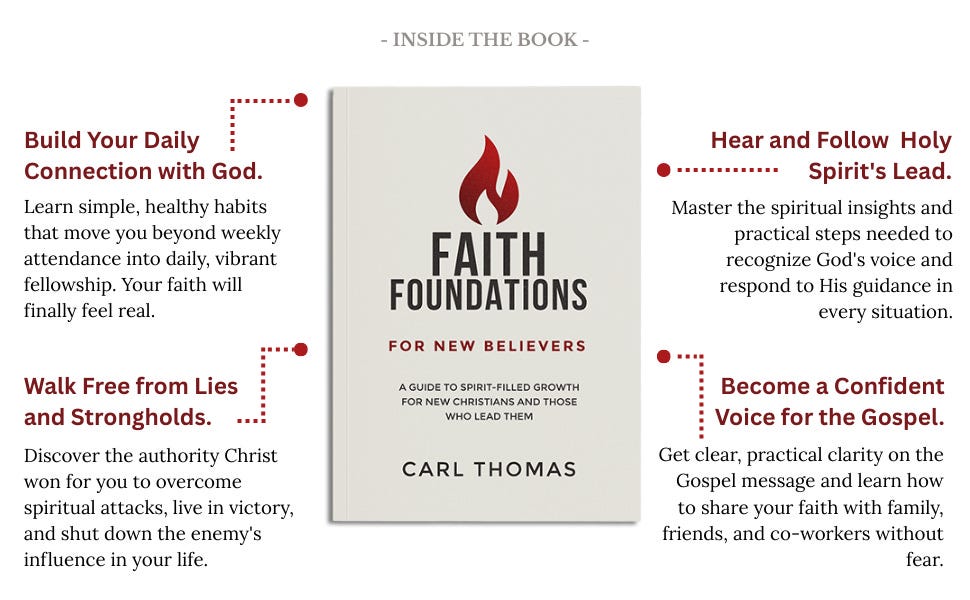
My attempt at a solution to our lack of Charismatic spiritual formation is to write a discipleship manual that is Spirit-filled, balanced, theologically sound, and filled with hope. You can see it here.
Things have changed a lot since I met the Lord in a Charismatic home Bible study in 1974. I've been in many denominations since then—never in a charismatic church. Sadly, most of them have gone the same way as you describe the Charismatic churches. Much of the church today is made up of people recovering from leader abuse. It's true is all denominations. It's a large part of the prophesied Great Falling Away. All we can do is be Berean, and keep our focus on Jesus. He sent us the Holy Spirit to guide us through times like these.
Cannot love this enough!